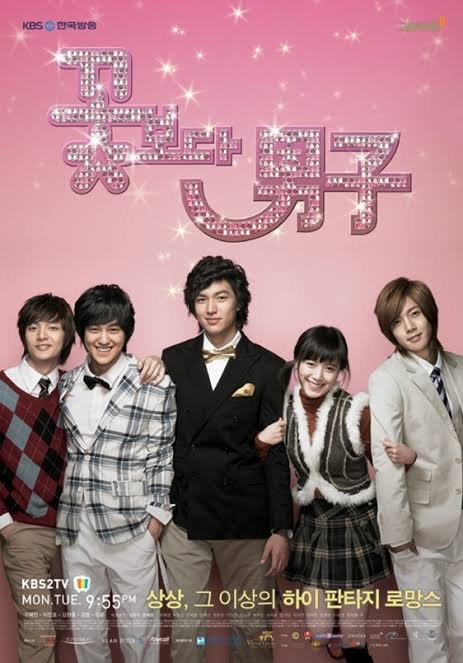
Boys Over Flowers (2009)
Genre: Romance, Comedy
Episodes: 25
Network: KBS
Clichè romantic-comedy, visual casts, mediocre storyline with the best original soundtracks.
Boys Over Flowers stands as an iconic K-drama classic, a staple in the repertoire of most K-drama fans. It holds a special place as many of us were introduced to the world of K-dramas through its captivating narrative when it soared to popularity in 2009. Amidst the funny scenes, romantic feels, second lead syndrome, clichés, and the ever-present love-and-hate relationship, this series encapsulates the essence of romantic comedy K-dramas from the early 2010s.
While the story might not be groundbreaking, the actors breathe life into their roles, making the series impactful. However, upon reflection, the drama’s portrayal of “cute stuff” reveals a romanticization of bullying, manipulative behavior, unhealthy relationships, and toxic dynamics. The love-hate relationship between the leads, though a staple in the genre, raises concerns about the acceptability of being with someone who once bullied you in the real world.
Geum Jandi’s character, despite being a strong female lead, is critiqued for her initially explosive and irksome portrayal. Gu Junpyo, the male lead, is labeled as the worst character from the beginning to the middle of the series. However, the undeniable chemistry between the main leads remains a captivating aspect, adding a layer of charm to the overall viewing experience.
In the intricate tapestry of Boys Over Flowers, the narrative unfolds with elements of charm and drama, weaving a tale that resonates with the hearts of its audience. The series masterfully combines elements of humor, romance, and drama, creating a perfect blend that keeps viewers hooked. While the drama may be critiqued for romanticizing certain problematic aspects, it also serves as a time capsule, reflecting the societal norms and expectations prevalent during its era. The love-hate relationship that permeates the storyline, although fraught with concerns in reality, adds a layer of complexity that is quintessential to the romantic comedy genre.
As the series progresses, character development becomes a focal point, allowing the audience to witness the growth and transformation of the protagonists. Despite initial annoyances with characters like Geum Jandi and Gu Junpyo, their arcs contribute to the overall charm of the narrative, showcasing the evolution of relationships and personal dynamics.
In conclusion, Boys Over Flowers remains a timeless classic that has left an indelible mark on the K-drama landscape. Its enduring popularity can be attributed not only to its magnetic main leads but also to its ability to capture the essence of an era and the universal themes of love, growth, and resilience. As fans revisit this iconic series, it continues to evoke a sense of nostalgia and admiration for the magic it brought to the world of Korean dramas.
Watch the highlight scenes of Boys Over Flowers here:
“It’s better to regret your actions, instead of regretting because you didn’t do anything.”
GU JUN PYO
 Exquisite Kdrama
Leave a comment