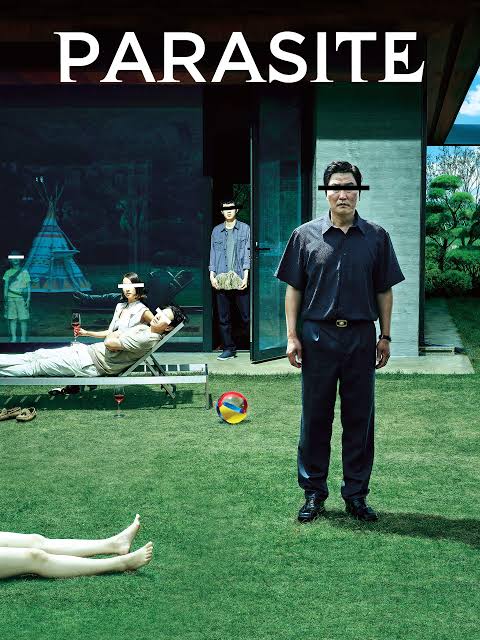
Parasite (2019)
Director: Bong Joon-Ho
Genre: Thriller/Black Comedy
Dark comedy satire that represents the Korea’s class division, a deep dive into desperation of the lower class that mirrors the society.
Bong Joon-Ho’s masterpiece Parasite won the “Best Picture Award” at the Oscars 2020. South Korean films gained massive popularity and received more streaming platforms after it dominated the Western Awards Shows due to Parasite’s success. It became as one of the biggest film of 2019.
Premise: Greed and class discrimination threaten the newly formed symbiotic relationship between the wealthy Park family and the destitute Kim clan.

Satirical, brilliant, and well-constructed, the opening scene depicts Ki-Woo searching for a Wi-Fi signal to leech off their neighbor, implying that petty theft is trivial for those living in poverty. It becomes evident that for people like them, moral uprightness is a luxury reserved for the bourgeoisie, suggesting that kindness is easier when life is good.
As the story unfolds, Ki-Woo recruits his family to work for the wealthy Park family, utilizing fake certifications and lies to manipulate their way in. In analysis, the Kim family isn’t lazy, but their lack of access to education makes finding employment challenging despite their skills. Their desperation stems from limited choices, highlighting how the class conflict victimizes the poor, exacerbating the wealth gap.
The film doesn’t portray the rich as antagonists, but they fail to empathize with the struggles of the poor, lacking self-guilt. A notable scene illustrates the contrast in perspectives on rain between Ms. Park and Mr. Kim, representing different social classes. While Ms. Park sees rain as a blessing for clearer skies, Mr. Kim views it as a disaster, as his flooded house leaves him with nothing. This disparity highlights the significant class inequality experienced by both parties.

The story skillfully unveils hidden symbolic meanings, revealing Director Bong’s clever depiction of the gap and dynamics between the rich and poor in Parasite. The film delves into materialism, status envy, and the impact of class status on driving people to commit heinous acts, serving as an eye-opener to the clearer realities of Korean society.
Metaphorical symbolism is exemplified through the scholar stone given to Ki-woo by his friend, representing hope and desire. The weighty stone, both a gift and potential burden, mirrors Ki-woo’s fortunes as luck starts favoring his family in their roles as helpers for the Park family. The early rejection of one pizza box by the Kim family, who consist of four members, foreshadows a grim fate, hinting that one out of the four will meet a tragic end. Ironically, the seemingly smarter rich family appears naive compared to the less-educated Kim family, who effortlessly deceive the Parks.
The film’s entertainment and engagement stem from its initially light tone, gradually transitioning into a serious and unexpectedly intense narrative. The cinematography, marked by shots with deeper meanings, adds another layer to Parasite. The plot takes an unforeseen turn, introducing scary and nightmarish features in the climax, creating a memorable and impactful viewing experience.

The impact of Parasite is undeniable, it is one of the masterpieces of Korean Cinema. Inspired from the film in 1960’s entitled The Housemaid, both set the bar high of what horror should be is.
If you like light scenes turned into something serious and bloody hell, then Parasite is for you!
Watch the trailer of Parasite here:
“Parasite is not a simple tale of rich versus poor. No one is totally innocent or guilty.”
BONG JOON-HO
 Exquisite Kdrama
Leave a comment